Final Thoughts
The most important thing I learned this year is that there is a fundamental difference between using technology and owning it. Most of us spend our lives as digital renters. We pay monthly fees for apps that track our habits or manage our schedules. We use these tools because they are convenient. But we do not actually understand how they work. When the subscription ends, the utility vanishes. My inquiry project into Excel was an attempt to break this cycle.
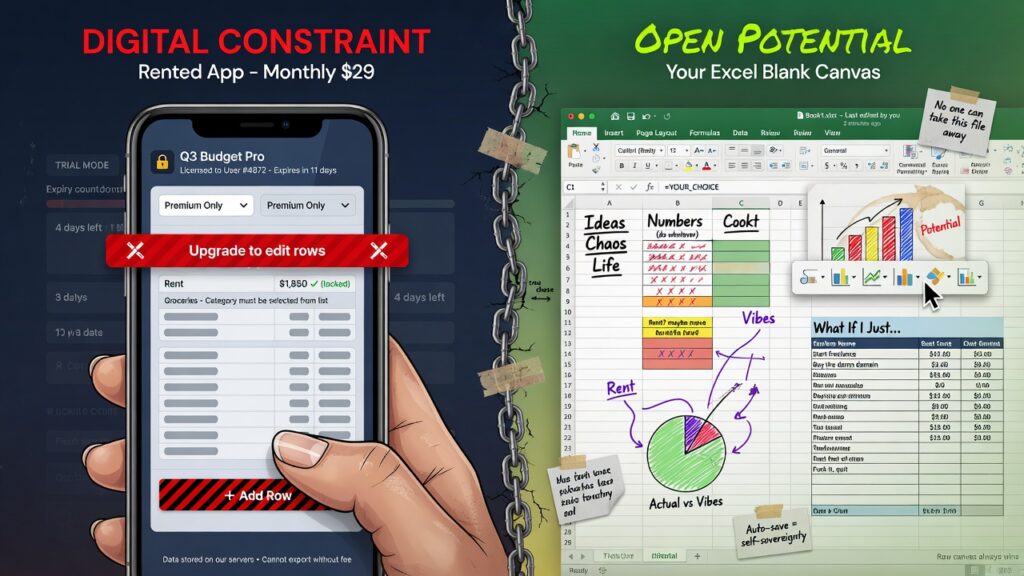
I decided to build my own habit tracker using Excel instead of downloading another generic app. At first, this seemed like a simple technical task. I thought I just needed to learn a few formulas. As the course progressed, I realized that the project was actually a practical application of the theories we were discussing in class. When Bonnie Stewart spoke about datafication, it changed how I viewed my spreadsheet. I was no longer just organizing cells. I was creating a private logic engine where I controlled the data. No hidden algorithms were trying to keep me addicted to an interface.
The technical shift from basic formulas to VBA scripts was where the real learning happened. I had to move from being a consumer to being a producer. This process was supported by our discussions on Generative AI. I stopped trying to manually write every single line of code. Instead, I learned how to generate and evaluate. I used AI to help me draft the scripts for my automation buttons. Then I used the digital literacy skills from this course to verify that the code was functional and secure. This new way of doing work is less about having all the answers and more about knowing how to find and validate them.
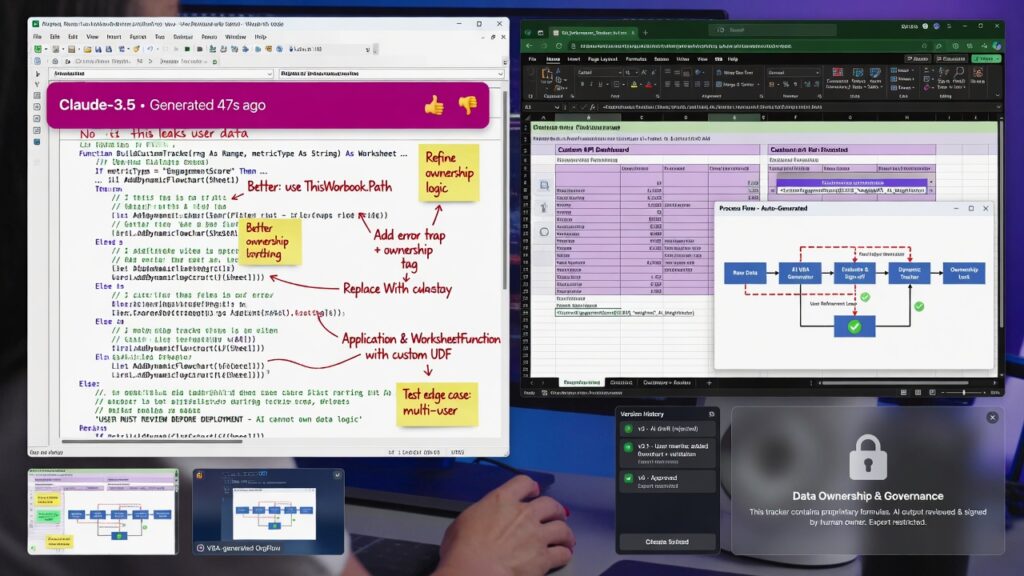
Learning Excel at a deep level is a high-utility skill for a business student. It is the language of modern commerce. But the specific functions I learned are secondary to the skill of learning how to learn. The digital landscape shifts so quickly that specific software proficiency has a short life. What actually matters is the ability to pick up a complex tool and learn how to use it.
This course provided the framework to understand why this matters. It taught me that digital literacy is not just a set of technical skills. It is a form of agency. By building my own tools, I am no longer forced to use what software developers try to sell to me. I can identify a problem and build myself a solution from scratch. That kind of autonomy is the most valuable thing I will take with me into my future career. I am no longer just a passive user of digital systems. I am an active participant in them.